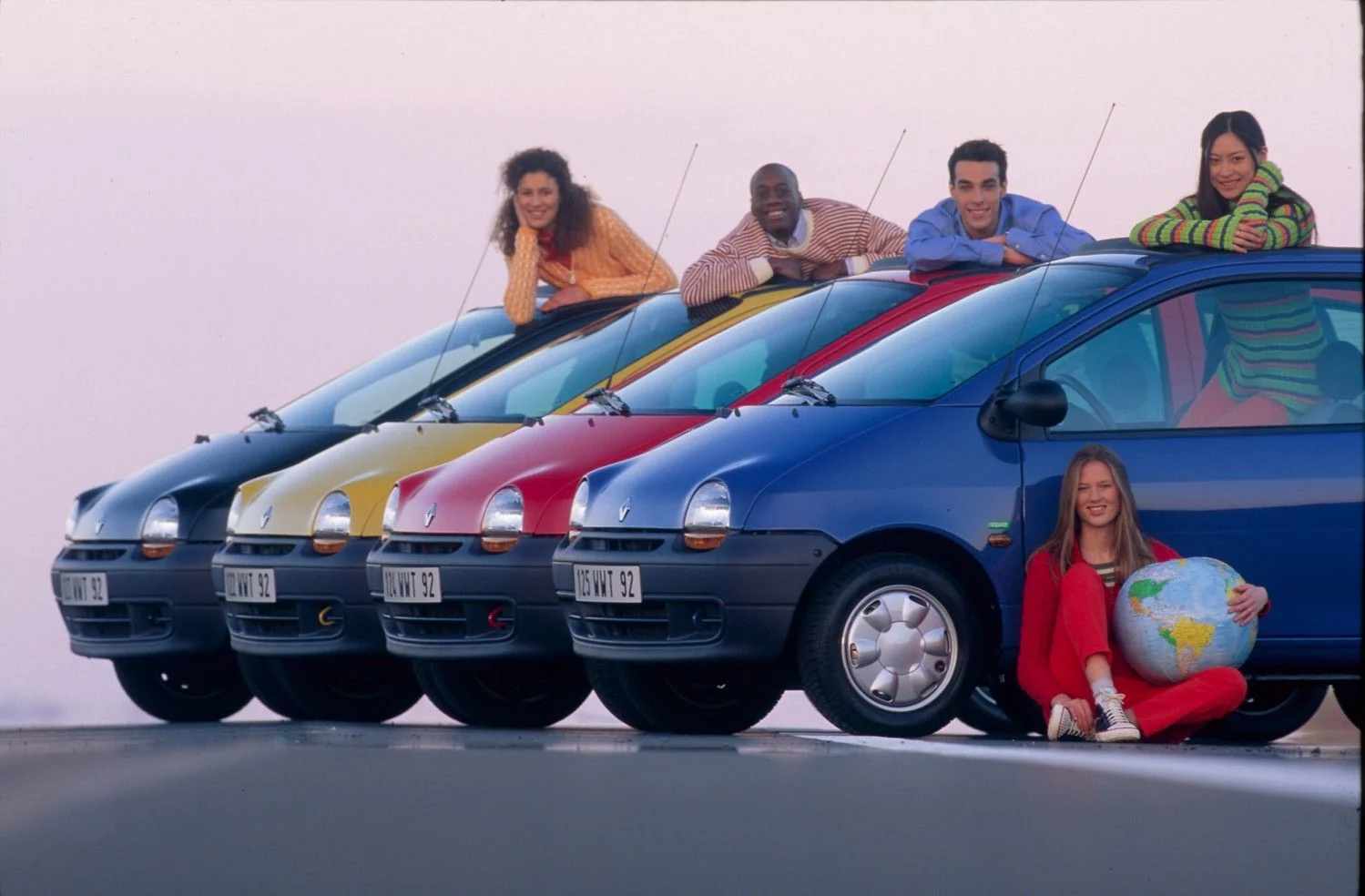
When the Renault Twingo burst onto the scene at the Paris Motor Show in October 1992, it caused a sensation. With its frog-like profile and smiling face, it shook up all the conventions of the city car segment. Behind this project, dubbed X06, you don't find a simple product sheet, but the story of passionate men, who became the founding fathers, who fought against automotive conservatism to impose their vision and develop an innovative product.
The trio of founding fathers
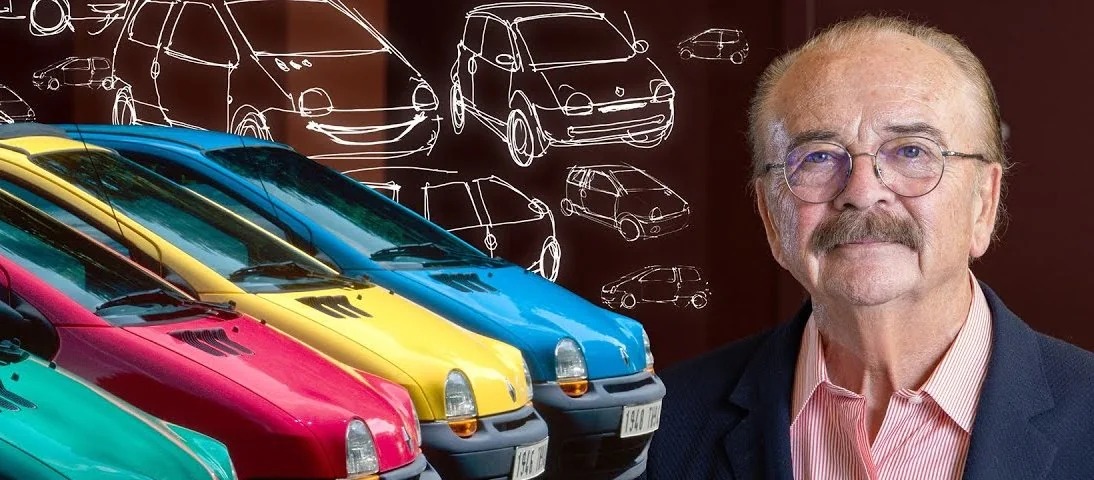
Patrick Le Quément
Trained in industrial design in England (Birmingham Institute of Art and Design), Patrick Le Quément worked at Simca, Ford and Volkswagen before joining Renault in 1987 as Director of Industrial Design. There, he instilled a true stylistic revolution, advocating strategic design and a strong identity.
He was the savior of the X06 project, which was then on the verge of being abandoned. Charmed by the sketches of a small minivan, he imposed his vision of a car with an expressive and welcoming "face." It was he who uttered Raymond Lévy's legendary words: «"The biggest risk for Renault is not taking any risks."», thus obtaining carte blanche to finalize the design.
Yves Dubreil
A graduate engineer from École Centrale Paris, Yves Dubreil joined Renault in 1969. A man of challenges and an outstanding communicator, he climbed the ranks until he was entrusted with the management of the X06 strategic project in 1988.
As project manager, he implemented innovative engineering methods to reconcile an extremely tight budget with record-breaking interior space. He championed the "design to cost" concept without sacrificing user experience, while also overseeing the integration of major innovations such as the sliding rear bench seat.
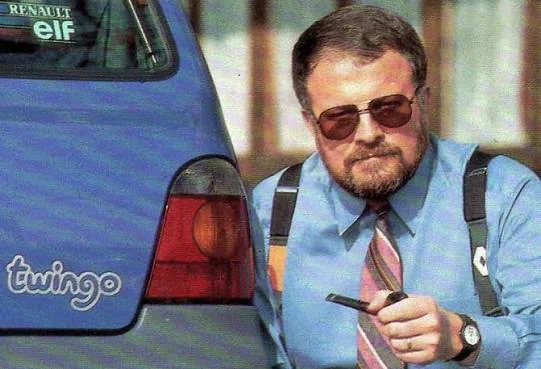
Jean-Pierre Ploué
A graduate of the École Nationale Supérieure des Arts Décoratifs (ENSAD), Jean-Pierre Ploué began his career at Renault in the late 1980s. He would later become one of the greatest leaders in French design, notably reinventing the Citroën and then Stellantis style.
He is the exterior designer of the vehicle. Inspired by the W60 prototypes and the silhouette of minivans, it was under his pen that the single-volume line, the round headlights in the shape of eyes and the ventilation on the hood reminiscent of nostrils were born, giving the Twingo its carefree nature and its immediate appeal.
The Pillars and Visionaries
Raymond Lévy
A graduate of the École Polytechnique and the Corps des Mines, Raymond Lévy enjoyed a brilliant industrial career (notably at Elf Aquitaine) before taking over as president of Renault in 1986, in a context of delicate financial restructuring.
As CEO at the crucial moment, he dared to decide in favor of the X06 project despite the skepticism of several internal directors. Swayed by Patrick Le Quément's arguments, he allocated the development budget and approved the marketing of a vehicle completely different from the rest of the range.
Gérard Gauvry
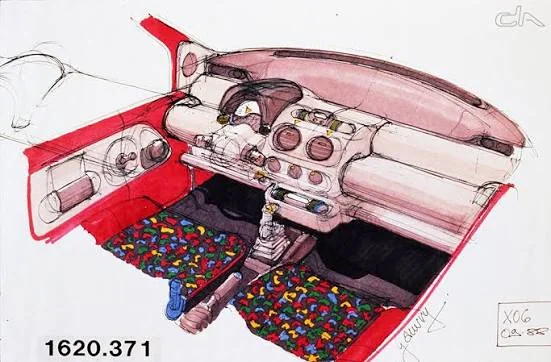
Trained at the Beaux-Arts de Grenoble, the Arts Décoratifs and the École Boulle, Gérard Gauvry is a seasoned specialist in interior design and furniture design applied to automobiles within the Renault studio.
He is the designer of the iconic interior of the Twingo 1. He is responsible for the minimalist and user-friendly dashboard, the central digital display shared by all passengers, as well as the famous touch of color provided by the controls and the "apple green" hazard warning button.
Jacques Cheinisse
Former racing driver and emblematic figure of the Alpine saga (of which he was the sporting director during the World Rally Championship title in 1973), Jacques Cheinisse subsequently took over the Product Management of Renault.
At the helm of the product, he championed the concept of a simple, single-version, and modular car. He endorsed the strategic idea of launching the Twingo with a single equipment level and a vibrant color palette, eliminating industrial complexity to offer a highly competitive price.